Bright Side
Reimagining Education for a New Generation – Muhammad Faizan Khan

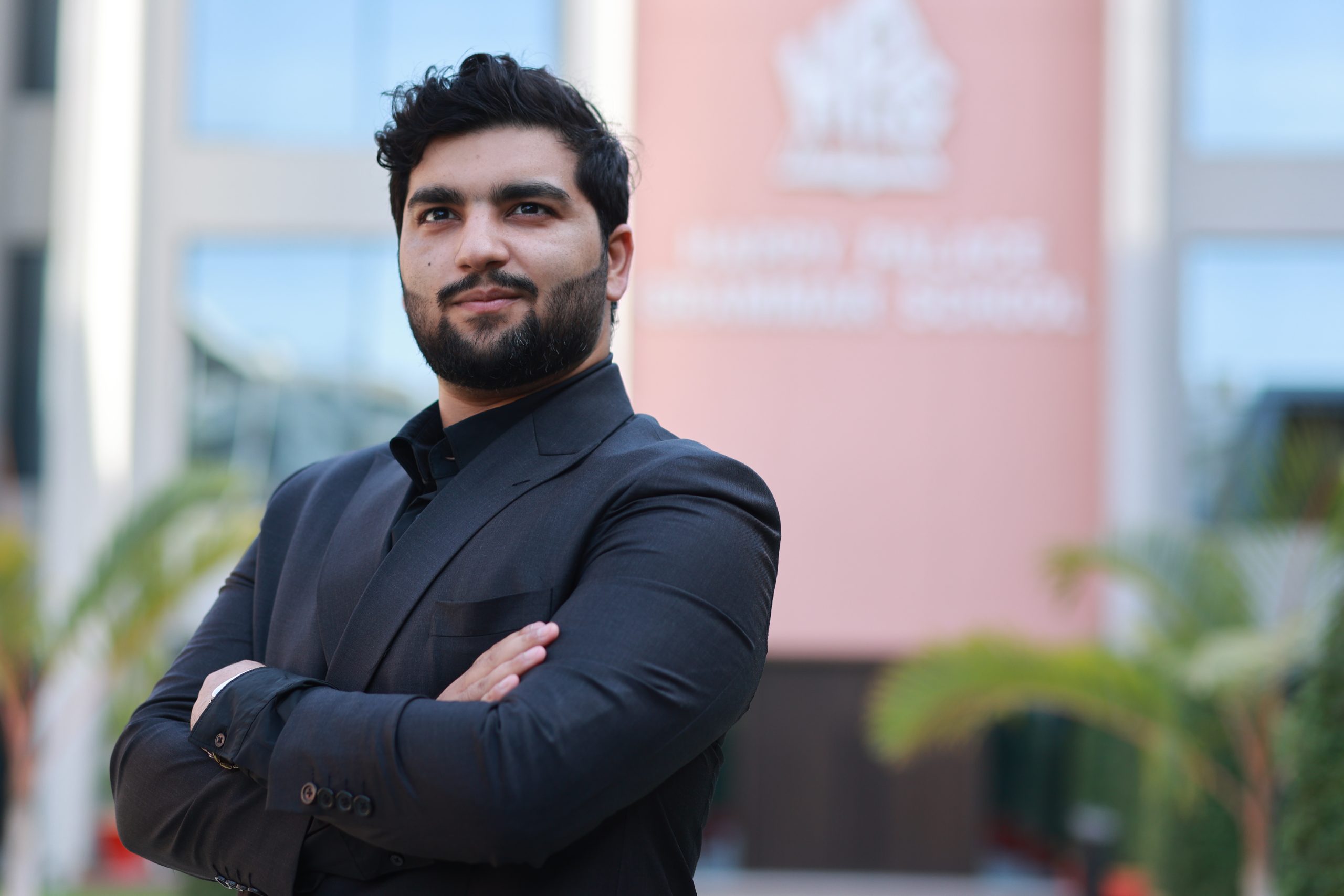
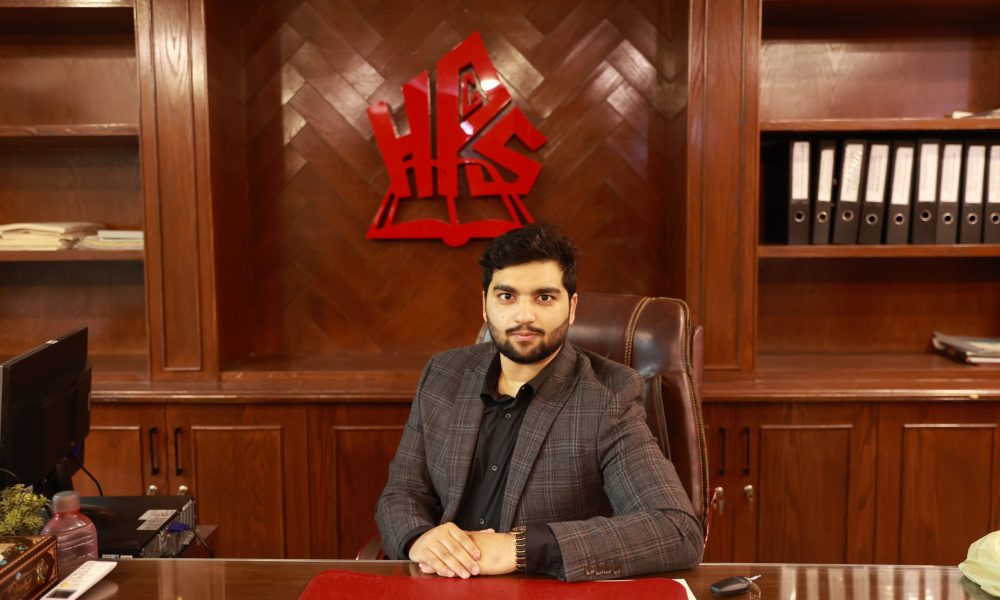
As one of Pakistan’s youngest education leaders, Muhammad Faizan Khan is bringing a fresh, globally informed perspective to the country’s academic landscape. Managing Director of Happy Palace Group of Schools, his focus is on innovation, educational reform and future-ready learning environments that extend far beyond traditional classrooms.
You are among the youngest educationists in Pakistan in a leadership role. How has it shaped your approach to educational reform?
Being a young educationist has allowed me to remain closely connected to the mindset, aspirations, and evolving realities of today’s students. I believe one of the advantages of young leadership is the ability to better understand how rapidly the educational landscape is changing whether through technology, shifting career pathways, or the increasing importance of creativity, adaptability, and emotional intelligence.
My academic background in Economics from King’s College London, followed by a diploma from City University London and a Master’s in Education, exposed me to a range of global educational philosophies and institutional models. Those experiences shaped my belief that modern education must move beyond memorization and focus more deeply on critical thinking, communication, confidence-building and intellectual curiosity.
At the age of 25, being recognized as one of Pakistan’s youngest and most impactful educationists was both humbling and motivating. More importantly, it reinforced my sense of responsibility toward contributing meaningfully to educational reform and institutional development.
As someone who has studied at international universities, what led you to choose a role in a family-led education business?
For me, education was never simply a profession, it was part of my upbringing and identity from the very beginning. I was born in 1995, at a time when the school itself was operating on the first floor of our building while our family lived on the ground floor. Most of my pre-teen years were spent in that environment, surrounded by classrooms, teachers, students, and constant conversations about education.
In many ways, I feel I grew up alongside the institution itself. That early exposure gave me a deep appreciation for the transformative role schools can play in shaping individuals and communities. Later, studying internationally broadened my perspective significantly, but it also strengthened my desire to contribute to Pakistan’s educational landscape. Joining the institution was therefore not simply about continuing a legacy it was about evolving it through modern educational thinking, innovation, and long-term institutional vision.
As Managing Director, how do you define the identity and long-term vision of the Happy Palace School Network?
The identity of Happy Palace is rooted in academic excellence, discipline, ethical values, and holistic student development. Our objective is not merely to produce academically capable students, but to nurture confident, intellectually curious, and socially responsible individuals. Our long-term vision is deeply ambitious and future oriented. We are currently developing five purpose-built campuses ranging from approximately 5,000 to 50,000 square yards, designed to provide modern learning environments that integrate academics, technology, sports, creativity, and student well-being within a unified ecosystem.
Beyond school education, we are also planning to establish two universities within the next five to seven years. Our broader vision is to create a complete educational continuum that supports students from foundational learning through higher education while maintaining a consistent philosophy of excellence, innovation and character development.
When I reflect on where the institution began with the school operating upstairs while we lived downstairs and compare it to where we are today, planning large-scale campuses and future universities, it becomes deeply meaningful. It represents not only institutional growth, but decades of commitment to education and community impact.
What does effective governance look like when managing a growing school franchise across multiple cities?
Effective governance, in my view, is the ability to preserve consistency of vision and educational quality while operating at scale. As institutions expand across multiple campuses and cities, strong systems become essential for sustainability and long-term success.
At Happy Palace, we place significant emphasis on centralized academic planning, teacher development, performance evaluation, institutional oversight, and continuous coordination between campuses. However, effective governance also requires balance. While maintaining unified standards, campuses must still retain the flexibility to respond to the specific cultural and community needs of their local environments. Ultimately, strong governance is about building systems that sustain excellence beyond individuals and ensure that every student receives the same standard of education regardless of location.
Technology integration is one of your priorities. How is this being implemented across the network?
Technology has fundamentally transformed the way students learn, communicate, and engage with information. Educational institutions therefore have a responsibility to evolve alongside those changes rather than resist them. Our approach is to integrate technology meaningfully across the entire network instead of treating it as a superficial enhancement. This includes smart classrooms, digital learning platforms, centralized academic systems, and technology-focused teacher training initiatives.
Teacher training is central to your agenda. How do you scale professional development across so many schools?
I strongly believe that the quality of an educational institution is ultimately defined by the quality of its teachers. Infrastructure and curriculum are important, but meaningful education depends on intellectually engaged and continuously evolving educators. For that reason, teacher development remains one of our most important institutional priorities. We conduct regular workshops, centralized training programmes, classroom observations, mentorship initiatives, and professional development sessions throughout the academic year. More importantly, we aim to cultivate a culture where learning is not limited to students alone. Teachers must also remain adaptable, reflective, and committed to lifelong professional growth in order to meet the evolving needs of modern education.
Early childhood learning is a major focus area for you. How is this being strengthened across all branches?
Early childhood education plays a defining role in shaping cognitive, emotional, and social development. The foundations established during those formative years often influence a child’s long-term relationship with learning itself. Our focus is therefore on creating a standardized yet nurturing early learning environment across all campuses. This includes curriculum consistency, teacher specialization, activity-based learning methodologies, and classrooms designed to encourage curiosity, creativity, and confidence. We believe early education should not merely prepare children academically; it should cultivate independence, communication skills, emotional intelligence, and a genuine enthusiasm for learning from an early age.
In your view, what defines a strong school brand in today’s education landscape?
A strong educational brand is ultimately built on credibility, consistency, and trust. In today’s educational landscape, parents are increasingly evaluating schools not only on academic outcomes, but also on how effectively institutions prepare students for the future. A respected school must therefore offer far more than examination performance. It must develop confidence, communication abilities, leadership qualities, ethical awareness, and intellectual maturity.
Beyond academics, how do you ensure personality development and confidence-building across campuses?
We strongly believe that education should focus on the development of the individual as a whole rather than academic achievement alone. Across our campuses, we place considerable emphasis on public speaking, debates, leadership initiatives, sports, co-curricular engagement, and student participation programmes. These experiences help students develop confidence, communication skills, emotional intelligence, and adaptability.
Looking ahead, where do you see the Happy Palace Group of Schools in the next 5–10 years?
Over the next decade, I see Happy Palace evolving into one of Pakistan’s leading educational groups with both national influence and growing international recognition. Our expansion plans through five purpose-built campuses and the establishment of two universities represent not simply physical growth, but institutional evolution. Alongside expansion, we intend to continue strengthening academic quality, technological integration, teacher development, research culture, and innovation-driven learning. Personally, receiving international recognition for my contributions to education, including an upcoming award ceremony at Oxford University, has further reinforced my commitment toward contributing meaningfully to educational advancement both within Pakistan and beyond.
Artificial Intelligence is rapidly transforming education globally. How is Happy Palace integrating AI into its educational model?
I believe Artificial Intelligence will fundamentally reshape not only education but the broader relationship between knowledge, creativity, and human potential. Educational institutions therefore have a responsibility to prepare students not merely to exist within an AI-driven world, but to engage with it critically, ethically, and intelligently. At Happy Palace, AI integration is not treated as an optional or isolated initiative. It has been systematically embedded into our academic framework, and from Kindergarten through Grade VIII, AI education is mandatory across the network. Our approach goes beyond simply exposing students to technology; we aim to cultivate technological fluency from an early age.
Students are introduced to AI tools in ways that are age-appropriate and intellectually progressive. At foundational levels, the emphasis is placed on digital familiarity, curiosity, and responsible interaction with intelligent systems. As students advance, they begin learning how to utilize AI tools for research, creativity, problem-solving, productivity, and analytical thinking. Equally important, we are teaching students how to think alongside technology rather than become dependent on it. There is a significant difference between using AI passively and understanding its implications, limitations, ethical dimensions, and transformative potential. We want students to develop discernment, adaptability, and intellectual independence while interacting with emerging technologies.
In parallel, we are also integrating AI into teaching methodologies and institutional systems. Educators are being trained to utilize AI-assisted platforms for lesson planning, differentiated learning, academic analysis, and student engagement. This allows teaching to become more personalized, data-informed, and responsive to individual learning needs.
What do you believe truly sets the Happy Palace Group of Schools apart within Pakistan’s educational landscape?
What truly distinguishes Happy Palace is that we do not view education through a purely academic lens. Our philosophy centres on building a complete educational ecosystem that combines academic excellence, innovation, leadership development and future readiness within a single framework. While our network has grown to more than 55 campuses, our identity is defined not simply by scale but by the diversity of opportunities available to students.
We offer multiple educational pathways across various examination systems, ensuring students can pursue learning environments suited to their strengths and aspirations. At the same time, we have integrated STEM education, robotics, artificial intelligence, financial literacy and practical skill development into our broader educational approach. Beyond academics, students engage in sports, leadership initiatives, clubs and co-curricular programmes that support holistic development.