Art
Sculpturing the Inner Soul – Abdul Jabbar Gul

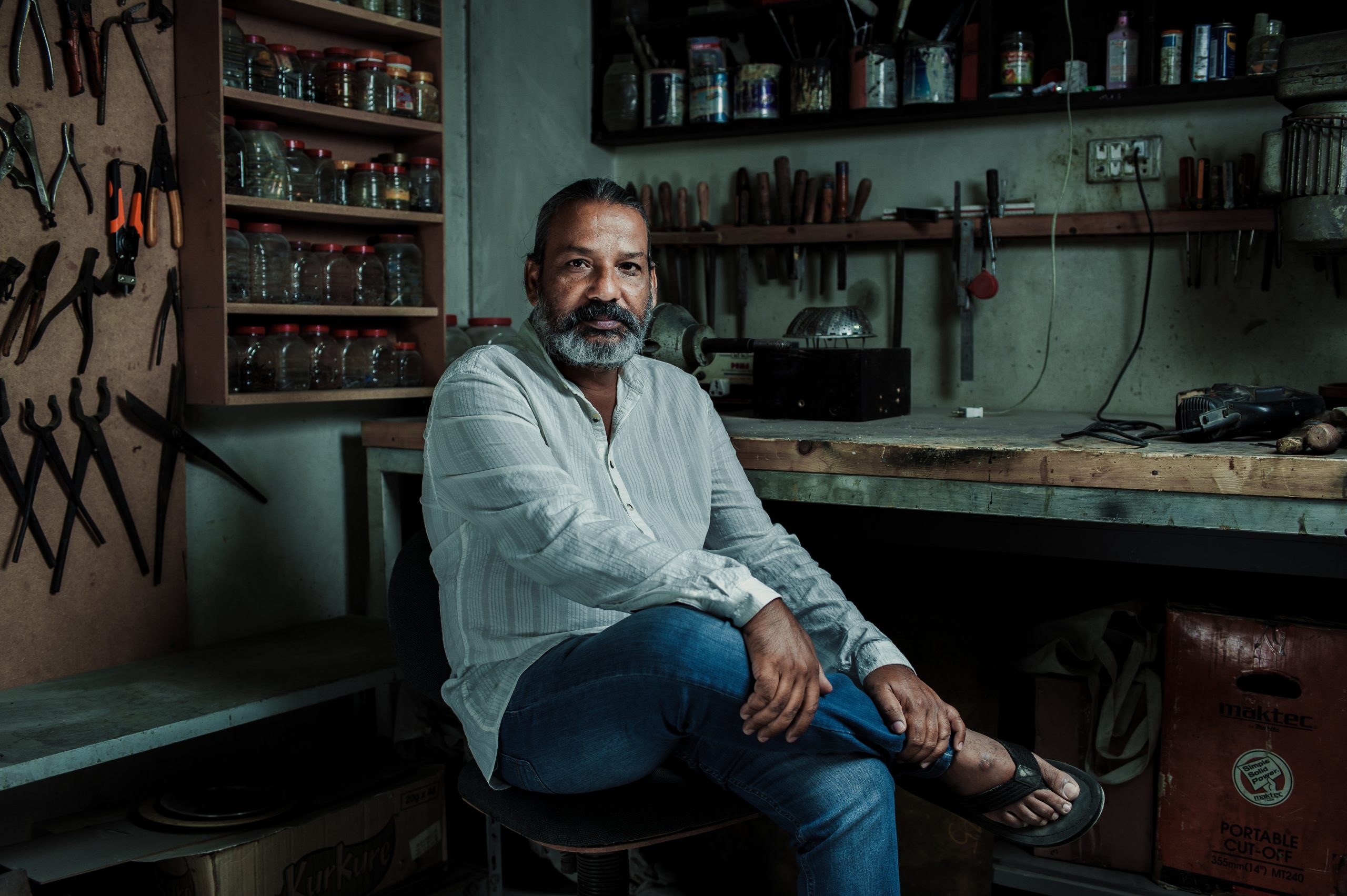
Abdul Jabbar Gull, one of Pakistan’s most celebrated sculptors, has spent decades exploring the human form and its deeper philosophical and spiritual dimensions. From his early days in Mirpur Khas to residencies across the world, Gull has continuously challenged himself. His work seamlessly blends technical mastery with profound reflection on individuality, society, and the metaphysical. In this interview, he shares insights into his creative journey, his teaching philosophy, and the ideas that continue to shape his sculptures.
Growing up in Mirpur Khas, far from Pakistan’s established art centres, what were the earliest moments that quietly shaped your creative instinct?
There were no formal art schools or structured exposure to the art in the city. In many ways, that was a limitation, yet it sharpened my instinct to observe and refine things independently. Even in primary school, I was praised for my handwriting and the careful presentation of my notebooks. That early recognition, though simple, planted a seed and made me aware of the importance of aesthetics. Later, I became fascinated by local signboard painters, mesmerised by their precision on a large scale. Assisting them became my first informal training. Gradually, this self-driven refinement shaped my creative instinct long before I imagined art as a profession.
At the National College of Arts, you explored multiple disciplines before committing to sculpture. What was it about sculpture that felt like a moment of recognition rather than a choice?
I initially enrolled as a design student and continued in that department until my third year. However, design often meant working within a client’s brief, responding to external demands. I realised that, while I respected the field, I longed for greater autonomy. I wanted to create without negotiating my vision.
When I transitioned to Fine Arts, I explored painting, printmaking, miniature and sculpture. Sculpture, in particular, unsettled and intrigued me. Unlike drawing and painting which felt intuitive and familiar, sculpture demanded physical labour, spatial awareness and patience. It challenged me technically and conceptually. Many people discouraged me, saying sculpture had limited commercial prospects. But I was drawn precisely to that difficulty.
The human form appears repeatedly in your work. What continues to draw you back to it as a central phenomenon of existence?
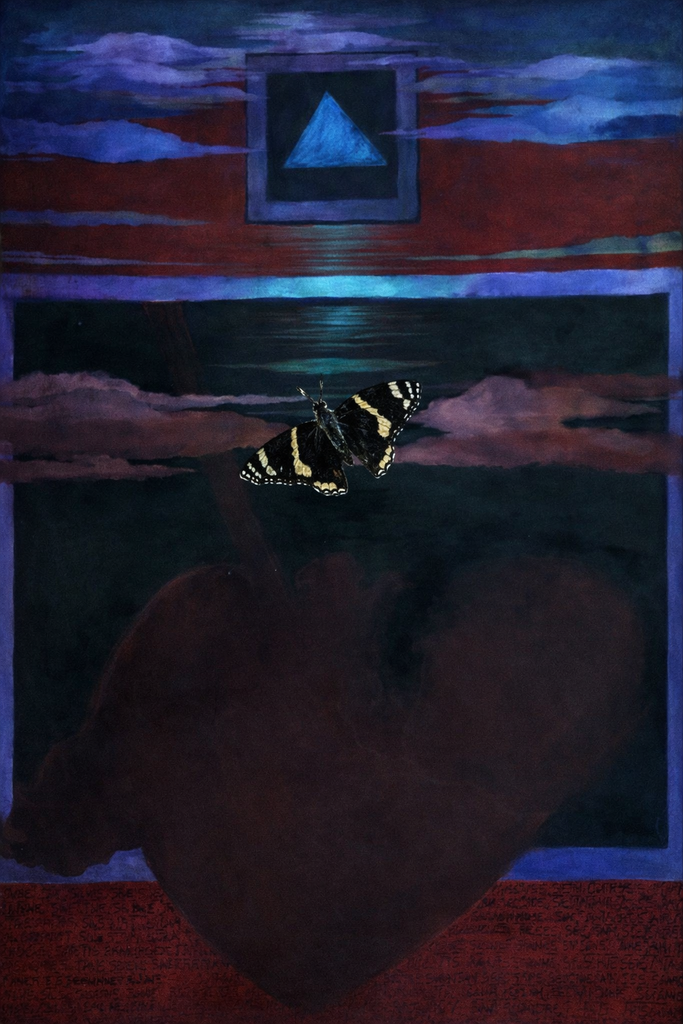
The human form is, for me, the most compelling subject in existence. My academic training equipped me with the technical ability to sculpt anatomically accurate figures, but beyond technical mastery, the form began to open deeper questions. When I sculpted something as seemingly ordinary as a hand, I realised how complex and sensitive it truly is, how many subtle movements and textures exist within it. That close study gradually shifted my focus from surface anatomy to existential inquiry. Who are we beyond our physical structure? What lies beneath visible identity? My interest in spirituality and Sufism naturally merged with this investigation. Series such as Ordinary Soul and Winged Thought emerged from this dialogue between the physical and the metaphysical. Over time, I developed a vocabulary where the form became simplified yet symbolic and was recognisable without a signature. The human figure remains my way of exploring individuality, universality and divine connection simultaneously.
You describe your subjects as ordinary souls. Who are these souls to you and why do their stories feel essential to preserve through sculpture?
From a distance, a crowd appears uniform. Yet when you look closely, every individual carries a completely distinct story, personality and experience. That tension between sameness and uniqueness fascinates me deeply.
When I speak of “ordinary souls”, I refer to everyday individuals — people who may seem ordinary in societal terms but possess extraordinary depth. There is humility in recognising oneself as part of that collective. I see myself among them. My sculptures attempt to preserve that quiet dignity, that individuality hidden beneath surface perception. Spiritually, I believe every human being is unique, yet connected to a universal whole. The challenge is to remain humble while acknowledging that uniqueness.
Politics and global power structures also surface in your work. Do you see sculpture as a form of resistance, reflection or quiet documentation of our times?
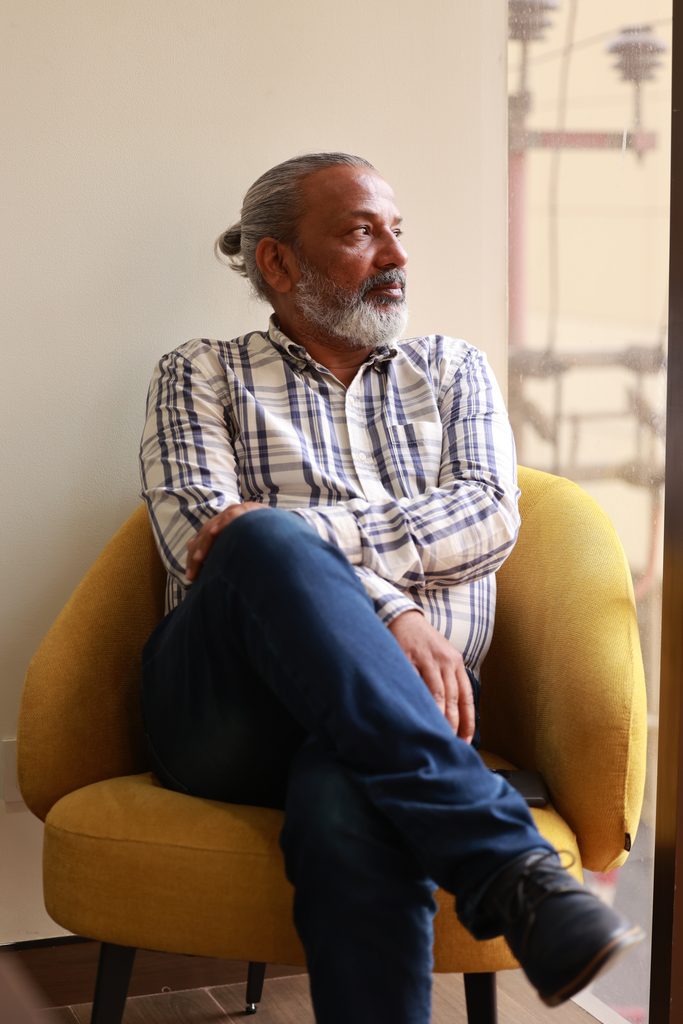
I believe it functions as all three. As artists, we are not isolated from political or social realities. Certain events demand a response; silence can also become a statement. However, I rarely approach such themes directly or didactically. We exist in both a physical and a spiritual realm. In the physical world, we react, critique and document. In the spiritual realm, we withdraw, reflect and seek connection. My practice attempts to hold both spaces simultaneously. Through symbolism and metaphor, I engage with contemporary realities while maintaining contemplative depth. The documentation is there but encoded.
From Johannesburg to Seoul and Spain, your residencies exposed you to vastly different cultural and working environments. How did these experiences reshape your understanding of scale, space and audience?
Travel fundamentally transforms perception. My first residency in South Africa was particularly formative. It exposed me to a layered history of colonisation, racial complexity and cultural hybridity. I encountered diverse identities coexisting within one landscape, and that broadened my understanding of audience and context. Subsequent travels across Asia, Europe and Africa further expanded my sense of scale and material possibility. Different cultures respond to space differently; they perceive form differently. These experiences reshaped not only my artistic language but also my worldview. Exposure dismantles narrow thinking. It teaches humility and adaptability.
Your sculpture, Winged Thought, has been used for the Hum Women Leaders Award three times. What does it mean to see your work celebrated this way? Was there a consistent vision behind its design?
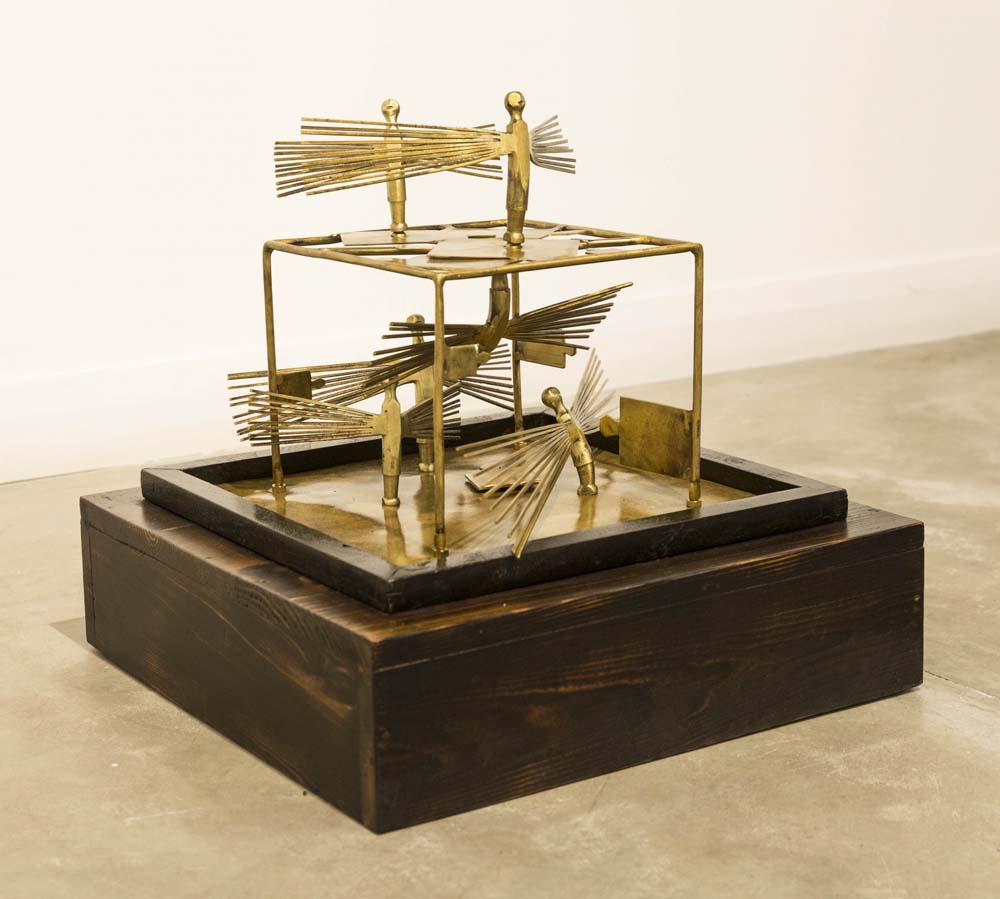
It is both rare and deeply meaningful to see one’s work become part of a national platform. Hum Network entrusted me with complete creative freedom, which was essential. Without that freedom, the work would not have carried the same integrity. Winged Thought symbolises energy, intellect and spiritual elevation. While some interpret it as an angel or butterfly, I see it as a manifestation of thought — and thought, to me, is pure energy. There are structural balances within the sculpture that represent the limits and possibilities of human intellect.
What made the awards special – all similar but differently made – is its dual nature: it is both a trophy and an original artwork. It holds symbolic, aesthetic and material value. That fusion reflects my consistent vision; to create something timeless, meaningful and worthy of the women it honoured.
Having taught sculpture for over a decade and continuing as visiting faculty, what do you hope younger artists learn beyond technique, especially in an increasingly fast image driven world?
We are likely the last generation to witness both analogue processes and the digital revolution. When we were students, access to information was limited; today, it is instant and infinite. This shift is extraordinary but comes with responsibility. I often tell students that Google provides information, not knowledge. Knowledge arises when information is questioned, tested and internalised. In today’s image-driven culture, there is pressure to produce quickly and seek instant validation. Yet art is not about speed; it requires depth, patience and sustained inquiry. True growth is gradual, built through repetition, reflection and humility. Intellectual curiosity and critical thinking are essential for work that endures.
How has teaching influenced your own practice and does guiding others ever challenge or renew your artistic certainty?
Teaching has profoundly shaped my practice because I have never allowed myself to feel complete. The moment a teacher assumes final authority, growth stops. Art resists certainty, and the classroom constantly reminds me of that. Students often raise questions that unsettle my assumptions, and sometimes they suggest solutions I had never considered. Such moments are both humbling and energising. They prove that learning is reciprocal, not hierarchical. Teaching also forces me to articulate instincts — to explain why a form succeeds or fails — which sharpens my own understanding. Younger generations bring fresh perspectives shaped by technology and global culture, keeping me open and evolving.
Receiving the President’s Pride of Performance Award in 2024 marked a significant milestone. How do you reconcile institutional recognition with an artistic journey rooted in questioning and uncertainty?
Receiving the Pride of Performance was a profound honour and I feel sincerely humbled by it. As one of Pakistan’s highest civilian recognitions, it carries immense significance. However, it was never my ambition, nor did I shape my career around awards. For me, art has always been a journey of inquiry, questioning form, identity, spirituality and society. Recognition may acknowledge a chapter, but it does not conclude the dialogue.
You mentioned that the younger generation seeks instant results and often abandons their efforts. What advice would you give them?
I am cautious about generalising an entire generation. Every era carries its own pressures and privileges. Today’s youth have unprecedented access to global archives, instant communication and platforms for visibility. Yet speed can become a trap: when results are expected immediately, patience weakens and depth suffers. My advice is simple, slow down and allow ideas to mature. Do not abandon direction because recognition is delayed. Read across traditions, from William Shakespeare to Allama Iqbal and Rumi. Question dominant narratives. Information is abundant; discernment is rare.