Art
Ingrained With the Creativity of The Owners

In a candid conversation with Rahat Zahid, we explored the heart of a home that has been lovingly shaped over many years. Every room carries a memory, every corner holds a story, and every decision reflects the couple’s journey of building a space that feels truly and deeply theirs. From thoughtful renovations to cherished furniture pieces collected over time, this interview offers an intimate glimpse into a home created with love, intuition, and a deep appreciation for natural beauty.
What are the most precious memories that you hold closest to your heart?
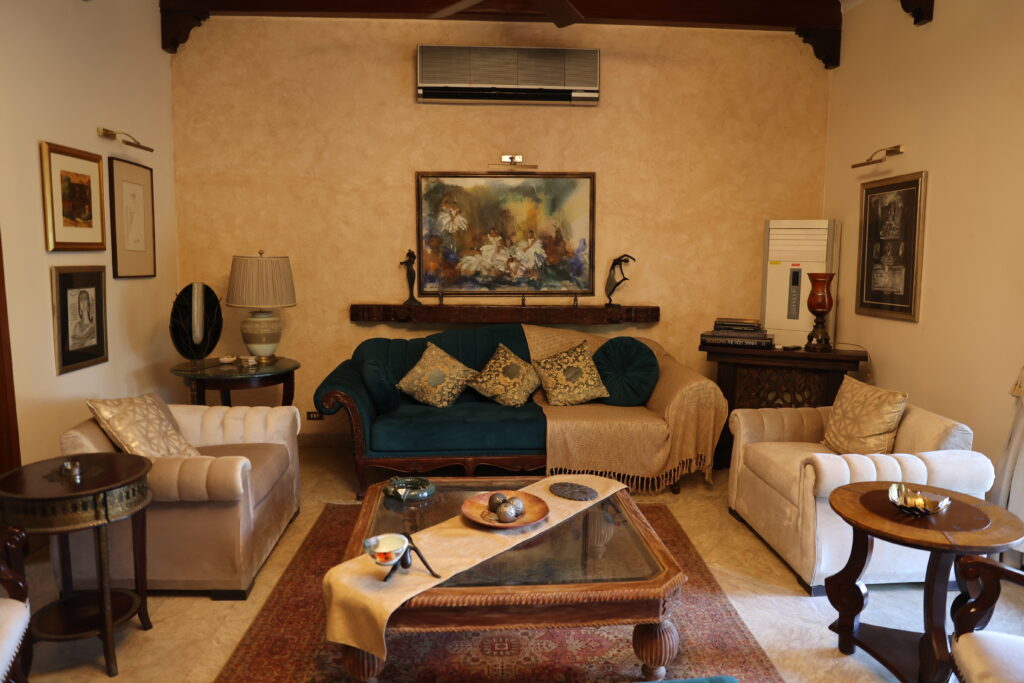
As the saying goes, every child is precious, and for me, every corner of this home feels the same. We’ve built this house with so much love that no particular space feels more important than another. Our main family room upstairs is where we spend most of our time, so it naturally feels comforting, but truly, I can’t single out a favourite spot. Every part of this home carries a sense of peace and familiarity because we’ve worked so hard to create it.
If you ever had the opportunity to move to a different or better home, would you take it? Or is this space irreplaceable to you?
It is absolutely irreplaceable. Even compared to our home in America, this is the one I call home. We’ve watched it evolve over the years, just as our children have grown within its walls. They were married here; we’ve celebrated countless milestones. When we first bought it, we couldn’t afford much because the house was enormous. We renovated slowly, sometimes painfully slowly, bit by bit. I still remember living without a dining table for six months because the chairs we loved were out of budget. We waited nearly a year to buy them, without ever compromising on what we truly liked. Those small struggles, the decisions we made with patience and intention, and the way we hosted guests despite not having much—every memory is woven into this house. That’s why it can’t be replaced.
When you bought this house, did you have a fixed idea of what you wanted to do, or did you follow your intuition as you went along?
We did have a few priorities, mainly the kitchen, flooring, and bathrooms. We decided to set those first. After moving in, everything else happened gradually. Sometimes, while living in a space, you suddenly realise what needs to be changed or improved. So, we would tweak things over time—a door here, a wall there—always based on what we could afford. It was a very slow, very organic process, and I think that’s what made it meaningful.
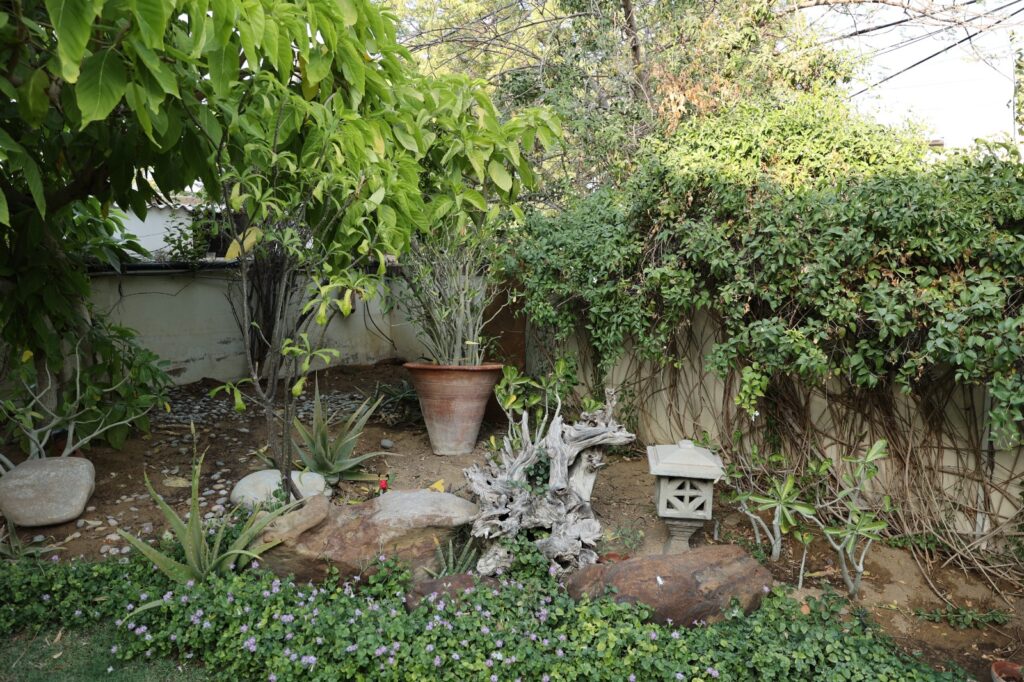
Maintaining such a large and beautifully kept home is no small task. How do you manage it so effortlessly?
It’s definitely not effortless, far from it. I’ve created a system where I focus on one area at a time. For example, when the children visit, we’ll concentrate on one room a day: first the upstairs living room, then another room, then the downstairs, then the outdoor spaces. But like every household, things break, people hide the evidence, and I only discover it when I’m setting things later! I always tell everyone: just be honest, don’t hide it, because it’s easier to fix something immediately.
People often say you’re blessed with a green thumb. Would you say you’re one of those who have a green thumb?
Not at all, I wouldn’t claim that! My husband is the one with the real gardening instinct. I simply guide him on the overall look. We’ve always preferred natural beauty rather than overly shaped plants. A tree should look like a tree, with its natural form and growth. We love greenery more than anything overly decorative. Seasonal flowers are lovely, but we value permanent plants and natural growth. My husband is into perfumery, so he loves fragrant plants like raat ki rani and motiya, you can smell them as soon as you enter. We sit in the garden depending on the weather. On pleasant days, especially weekends, we spend a lot of time outdoors, watching the children play or simply enjoying the fresh air.
Is there any area that you feel is your biggest comfort zone or sanctuary?
My sanctuary is the back patio. It’s peaceful, quiet, and feels wonderfully removed from the noise of the house. The upstairs living area is another comforting space, our true family hub. When my daughters visit, they refuse to come downstairs; we eat, sit, relax, and practically live upstairs for days. It feels like our true family sanctuary.
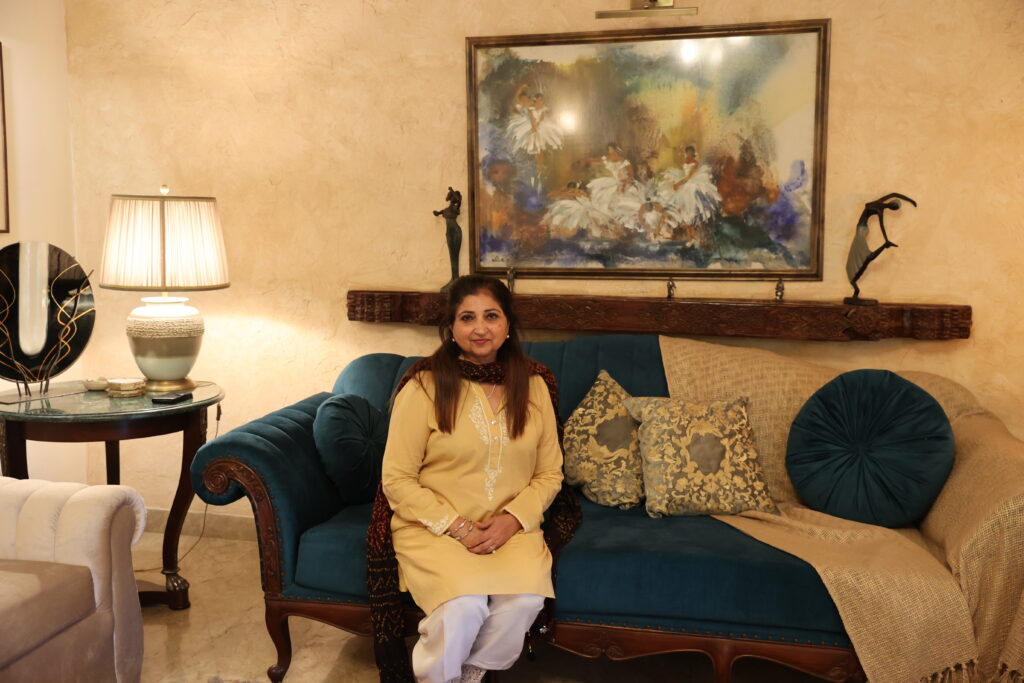
Homes often carry stories. Is there a piece of furniture, artwork, or décor element in your house with a memory or mystery you cherish?
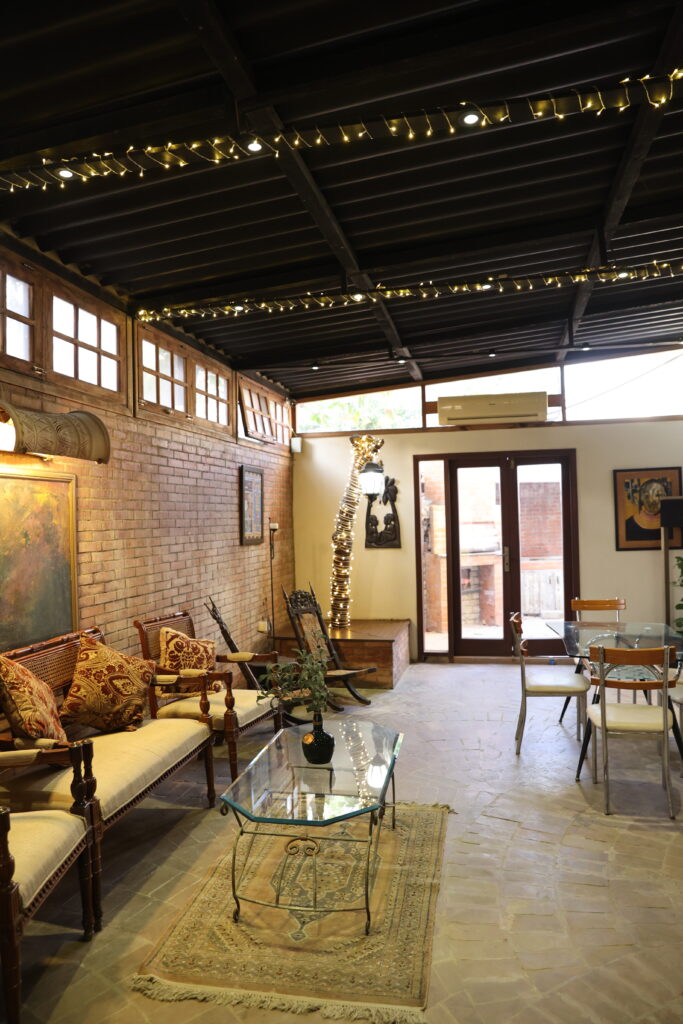
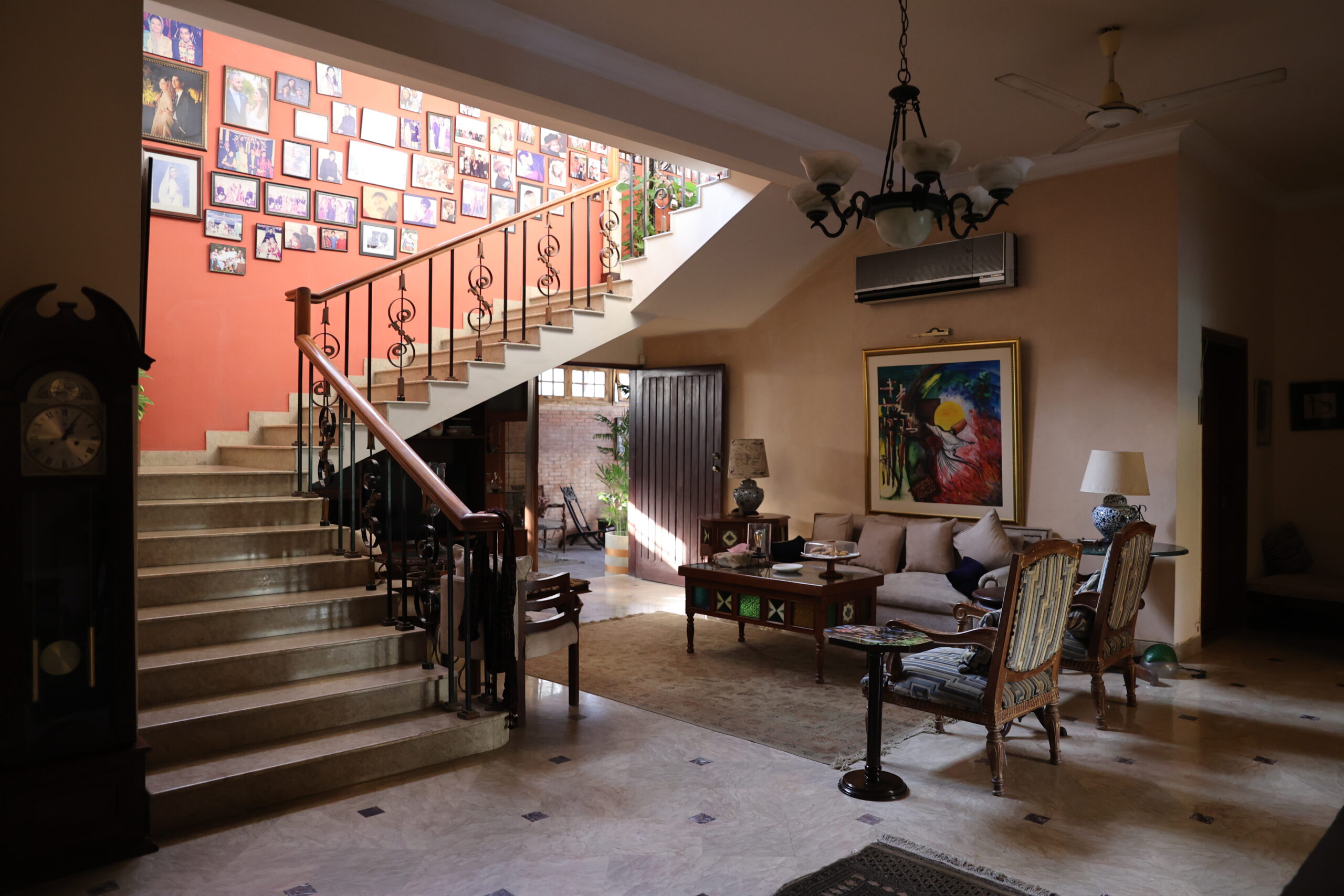
So many pieces carry stories. Most of our furniture wasn’t bought from high-end places; we collected it gradually, often discovering pieces unexpectedly and then refurbishing them. Each item reminds us of where we found it, what moment in life we were in, and what vision we had for it. I also love printing and framing photographs rather than keeping them hidden in a phone. When you walk around the house, you’ll see memories everywhere, our lives literally on the walls.
With your demanding roles as a designer and educator, does your home ever become your creative lab, somewhere ideas spark unexpectedly?
Absolutely. Creativity comes to me very instinctively. Whether I’m designing clothes or rearranging furniture, ideas often evolve while I’m working, rather than beforehand. Many times, a room ends up looking entirely different from what I originally imagined. Since I’m not formally trained in interiors, we’ve made our fair share of mistakes, but the process has always been experimental and enjoyable. My husband visualises things instantly, while I need to see them physically—so we balance each other out.
This house was in terrible condition when we bought it, and I couldn’t imagine how it could be transformed. He, however, saw its potential. Over time, our combined instinct, trial-and-error, and shared taste shaped it into the home it is now.
What advice would you give someone who wants to create a home that feels both beautiful and deeply personal?
Take your time. Don’t rush to fill your home all at once. Build it slowly and thoughtfully, even if you can’t afford professional help. A home should reflect you, not an interior designer. Collect pieces gradually, place them carefully, and live with them before adding more. Everything in your home should evoke a memory or feeling. Money can buy objects, but not the emotion attached to them. Ultimately, a home becomes beautiful through the love, patience, and personal meaning you weave into it—one piece, one memory at a time.