Cover story
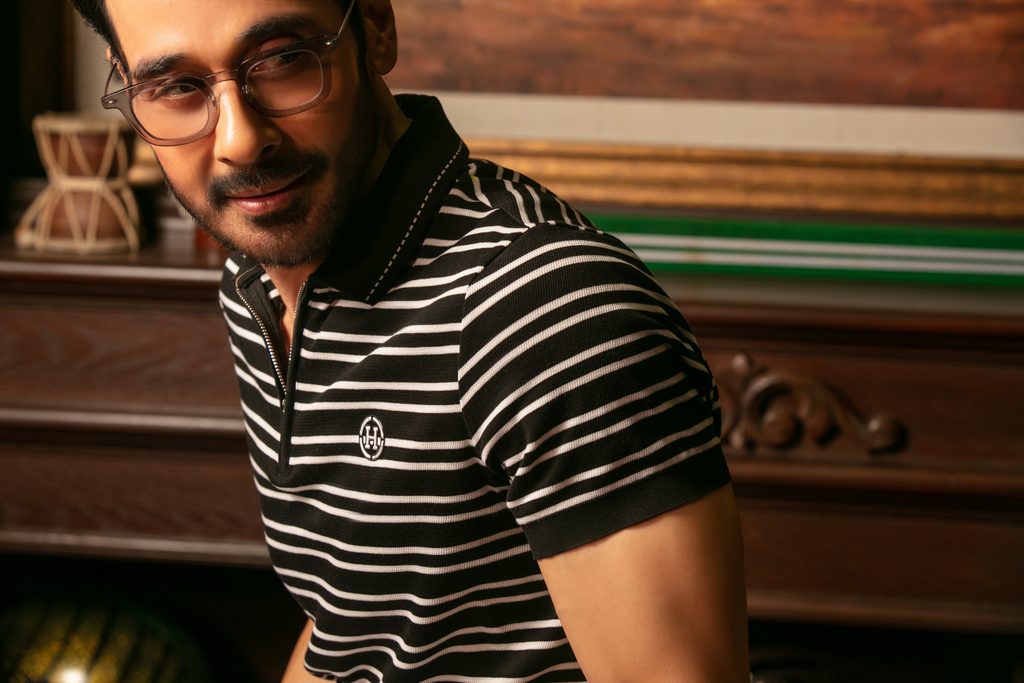
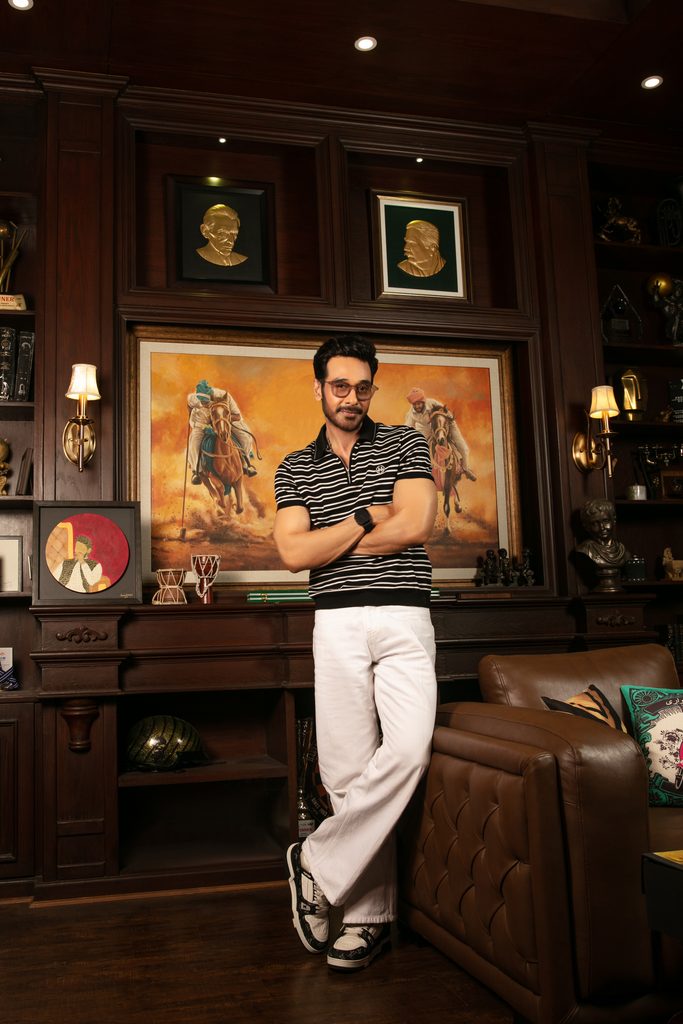
The Continuous Evolution of Faysal Qureshi

For many years, Faysal Qureshi has remained a constant in an industry defined by change. From his beginnings as a child artist to becoming one of Pakistan’s most celebrated actors, his journey has been marked by reinvention and an uncommon willingness to challenge himself. Behind the accolades and iconic performances lies an artist who still approaches every new role with the mindset of a student, convinced that evolution is the only way to endure
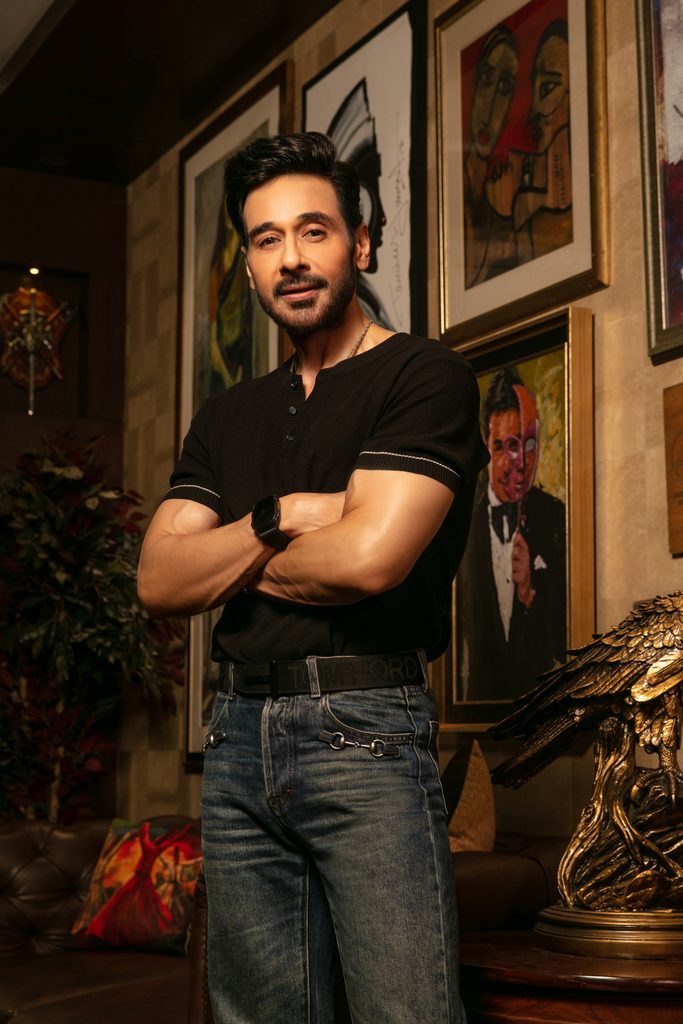
1. You began your journey as a child artist and have now spent more than four decades in front of the camera. Looking back, which phase of your life shaped you the most as an actor?
I think the foundation of an actor is built in childhood, and that’s where I learned the most. I had the privilege of working with some of Pakistan’s greatest artists such as Qavi Khan, Abid Ali, Firdaus Jamal and many others. They would take me to sit with director Yawar Hayat sahib. He used to speak about life and acting in such a philosophical way that I couldn’t understand what he meant.
Years later, while working with Abid Ali sahib, I told him, “You were building my motherboard.” He laughed and said, “Now you understand.” They gave me a foundation that has stayed with me throughout my career.

2. Very few actors remain relevant through changing eras, audiences, television trends and now social media. What has enabled you to sustain such remarkable longevity?
For an actor, change is essential. Every year, you have to evolve and do something different. If you stop changing, you stop growing. I’ve been incredibly fortunate because my seniors guided me at every stage of my career. Sajid Hassan once told me that no matter what happens, I should always bring something new; that advice stayed with me. Whether it was actor Nadeem, Javed Sheikh or any senior artist I worked alongside, they were always generous with their knowledge. When I moved into films, I continued learning from experienced actors there as well.
Now we’ve entered the social media era, and I’m still adapting to it. I’m a very one-track person. When I’m working, I’m completely immersed in my work. I don’t naturally think about taking behind-the-scenes photos or documenting every moment. That’s something the younger generation does very well. I’m learning, slowly.
3. From Boota and Bashar Momin to Channar Khan in Khaie and the multiple personalities of Behroopia, your career has been defined by remarkably diverse roles. What excites you most today—the character, the story, or the opportunity to surprise your audience?
Without a doubt, it’s the opportunity to surprise the audience. Whenever I get the chance, I try to do something completely different from what I’ve done before. That’s also why there are sometimes long gaps between my projects. After Case No. 9, for example, there was almost an eleven-month gap before my next major project because I didn’t want to repeat myself. Behroopia immediately caught my attention because it explored multiple personality disorder. The idea of portraying nine different personalities within one character was incredibly exciting. Initially, I wasn’t convinced because I felt the character’s age didn’t quite fit me, but after the script was reworked, I came on board.
For me, the excitement always lies in the challenge. Whether it was Boota, Bashar Momin, Channar Khan or Behroopia, each role pushed me in a completely different direction. I remember that after Boota, many people believed I could only play Punjabi-speaking characters. Then Umrao Jaan Ada came along, and people questioned whether I could carry an Urdu-speaking role. When it was released, I received tremendous appreciation.
4. You’ve previously said that when you begin a role, you ‘put Faysal Qureshi to sleep’ so the character can come alive. What does that transformation look like for you?
Every character has their own personality, their own way of thinking and reacting. Someone like Channar Khan, for instance, is nothing like me in real life. That’s why the first thing I have to do is let go of my own identity. If you don’t, there’s always going to be a conflict between you and the character. People know who Faysal Qureshi is, but when they watch a drama, they shouldn’t see me—they should see the character. I’m not a method actor. My preparation happens before I reach the set. I discuss the script, the character arc and every detail with the writer and director beforehand. Once I step onto the set, all the preparation is done. Then I simply enjoy becoming that person for as long as the camera is rolling.
5. More than a decade later, Bashar Momin remains one of Pakistani television’s most iconic dramas. Why do you think it continues to resonate with audiences?
Bashar Momin came at exactly the right time. It wasn’t just another drama—it felt different. At the time, television wasn’t producing projects on that scale. The wardrobes, the production design, the locations, the casting and even the storytelling were unlike anything audiences had seen before. We were inspired by the scale of Turkish dramas and challenged ourselves to create something equally ambitious for Pakistani television. Sometimes, everything simply comes together and people connect with it in a way you never expect.
Could it be made in exactly the same way today? I’m not sure. Audiences have changed, and so have critics. Today, every creative decision is analysed and questioned. Back then, people were more willing to simply enjoy a story. I always say that if the audience is entertained, then you’ve done your job. Not everything needs to be over-analysed. We’ve spoken about revisiting Bashar Momin over the years. In fact, we were discussing it again recently. Whether it happens or not, I don’t know, but if it ever does, it would have to evolve with today’s audience rather than simply recreate the past.
6. You’ve experienced fame before social media, during the satellite television boom and now in the age of digital fandom. Has the meaning of stardom changed?
There was a time when stars maintained a certain distance. People admired them because of their work, but they didn’t know much about their personal lives. Today, audiences want access. They want to know what you’re doing, what you’re eating, where you’re travelling and what happens behind the scenes. Actors who engage with their followers regularly have built very strong relationships with their audiences. I genuinely admire people who can do that. Personally, it’s still something I’m learning. If I’m at home, I’m usually reading or watching films. My learning process never really stops, so social media doesn’t always come naturally to me.
7. Being one of Pakistan’s most sought-after actors also comes with enormous expectations. Do you ever feel burdened by the pressure to live up to your own reputation?
There are times when you accept a project because of friendship or relationship within the industry rather than because it’s the perfect script. Sometimes you want to support a producer you’ve worked with for years, or help someone who stood by you earlier in your career. Then the audience asks, “Why did you do this drama?” It’s a fair question. Every actor faces moments like that. At the same time, I also feel an enormous responsibility because people have certain expectations from me. They expect quality, and I’m grateful for that. As long as audiences continue to expect the best from me, I consider it a blessing because it means they still care about my work.
8. Pakistani dramas are now watched across South Asia, the Middle East and beyond. In your opinion, what makes our storytelling resonate so strongly with international audiences?
People are naturally curious about other cultures, and Pakistani dramas present our culture in a very authentic way. More importantly, we’ve always been strong storytellers. Whether it’s the writers, the directors or the actors, we’ve consistently focused on telling emotionally engaging stories.
I’ve experienced this first-hand while travelling over the past year for film Deemak, cricket events, meet-and-greet and fundraising programmes. I have met people not only from Pakistan, India, Bangladesh and Turkey, but also from other countries who said they watch our dramas and genuinely enjoy them. Many don’t understand every word, but they still connect with the emotions. Another reason is that our dramas are concise. Most stories conclude within 30 to 35 episodes, so viewers remain invested from beginning to end instead of following a series for years. And, of course, we’re fortunate to have incredibly talented—and very beautiful—artists who have become recognised faces around the world.
9. With Deemak, you ventured into one of Pakistani cinema’s few serious horror films. What attracted you to the project?
When producer Rafay Rashdi first approached me, I assumed it would be another horror comedy because that’s generally what audiences associate with the genre here. When he told me it was a serious horror film, I actually asked him, “Who watches serious horror films in Pakistan?” He insisted that I hear the story first.
After our narration session, I was intrigued, but I’ve heard many great narrations that didn’t translate into equally strong scripts. So I waited until I read the screenplay. Once I finished it, I immediately called him back. What really impressed me was that the horror felt grounded. The situations were believable and emotionally relatable rather than relying on cheap scares. Even the supernatural elements were approached thoughtfully.
When I learned that the cast included Samina Peerzada, Sonia Hussyn, Bushra Ansari and Javed Sheikh, I felt even more confident about the project. For me, however, the biggest lesson from Deemak is that no film succeeds because of one person. People often praise actors, but filmmaking is a collective effort. A great actor cannot save a weak script. A brilliant script cannot survive poor direction. Likewise, even with a great script, cast and director, weak cinematography or sound can affect the final product. Everything has to work together. Even the biggest stars cannot guarantee success. If that were true, every Tom Cruise film would be a blockbuster.A good film is never the achievement of one individual—it’s the result of an entire team working in harmony.
10. Having worked through the era of PTV classics and today’s streaming generation, where do you think our storytelling has improved—and where have we perhaps lost something along the way?
Storytelling has definitely evolved, because audiences have evolved. In the PTV era, there was only one channel. Viewers had the patience to watch long scenes and slow-paced narratives because there were very few alternatives. Today, that’s no longer the case. People have countless choices. They have television, YouTube, OTT platforms and social media all competing for their attention. If you don’t hook them within the first episode—or sometimes within the first few minutes—they’ll simply move on to something else. Writers and directors understand this reality now, and I think they’ve adapted remarkably well. Today’s competition is much tougher. At any given time, there are dozens of dramas airing across different channels, all competing for the same audience. So when a drama manages to stand out today, I believe it’s a tremendous achievement.
11. You’ve spoken passionately about protecting Pakistan’s entertainment industry. What concerns you most about its future?
My biggest concern is employment. When one prime-time slot disappears from local television, you’re not just losing a programme—you are taking work away from more than a hundred people. Every drama supports actors, assistant directors, writers, camera crews, makeup artists, technicians and countless others whose livelihoods depend on these productions. That’s why I believe local productions should always be prioritised.
Governments have been very supportive of our film industry through grants and incentives, and we’re grateful for that. But at the same time, if imported content is given additional advantages, it creates confusion. I’m not afraid of competition. Pakistani dramas have proved themselves before. We produced classics like Meri Zaat Zarra-e-Benishan and Man-o-Salwa when Turkish and Indian content dominated our screens. The issue is ensuring our own industry continues to create opportunities for young actors, writers and technicians. That’s how an industry grows.
12. From Muskurati Morning to Salam Zindagi, hosting introduced you to people from all walks of life. What did those experiences teach you that acting never could?
Hosting completely changed my perspective. Before Muskurati Morning, I was living in what I call my own little bubble. As actors, we can become disconnected from everyday realities. Through those programmes, especially the episodes centring on social issues, I met people whose stories stayed with me long after the cameras stopped rolling. Some of those experiences even inspired characters and storylines in my later dramas. There were also stories that were simply too heartbreaking to share on television because families and children were watching. Those years grounded me. They helped me understand the struggles ordinary Pakistanis face every day, and that understanding made me a better actor.
13. You’ve often spoken about the importance of reading. In an age dominated by short-form content, do you worry that we’re losing something important?
Reading gives a person depth. Every book adds something to your thinking, your vocabulary and your understanding of people. All of that stays with you. You can’t gain that depth simply by scrolling through reels. It helps in acting and directing. I’m not against social media, but I do believe reading develops empathy and imagination in a way that quick content simply cannot. Whenever I meet young people who have genuinely read literature, the conversation is completely different. You can immediately sense the richness of their thinking.
14. Your light-hearted reels with your wife, Sana, have become hugely popular online. How did they begin?
It was entirely Sana’s idea! One day she said, “Let’s make a reel.” Now tell me, who can say no to their wife? So we recorded one just for fun and uploaded it. Our friends loved it, and then the response kept growing. We never planned to become content creators. Whenever we happen to have some free time, we’ll make a reel simply because we enjoy it. There’s no strategy behind it. It’s just something fun we do together.
15. Despite being one of Pakistan’s biggest stars, you’ve managed to maintain a remarkably grounded personal life. Is that a conscious choice?
When I’m working, I’m completely focused on work. But the moment I get home, I’m just another member of the family. I do the grocery shopping, help around the house and take care of everyday responsibilities. Fame stays outside the front door. That’s how I’ve always tried to live.
16. After decades in the industry, countless awards and hundreds of projects, do you still get nervous before a new role?
Every single time. Whenever a new drama begins, I genuinely feel as though I’m doing my very first project. I constantly call the writer and director. I ask questions. Sometimes I worry so much that they start laughing and tell me, “Sir, everything will be fine.” But I don’t think I’ll ever be completely satisfied with my work. The day an actor believes there’s nothing left to improve is probably the day they stop growing.
17. If today’s Faysal Qureshi could sit down with the young boy who had just entered the industry, what advice would he give him?
I’d tell him one simple thing: start taking care of your health when you are young. I came from a time when life was all about struggle. We were constantly running from one project to another and didn’t have the luxury of focusing on fitness. Today, no matter what happens, I make sure I’m at the gym every morning. If I could go back, that’s the one habit I’d have developed much sooner. Everything else—the success, the failures, the lessons—helped shape who I am today.