Uncategorized
Mother, Daughter and the Spaces Between

By Rumana Husain
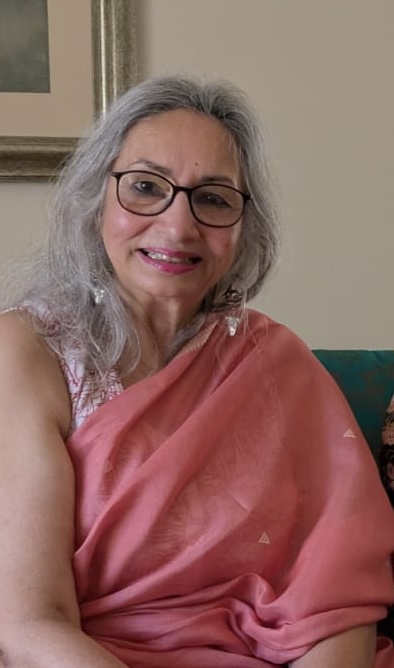

Beloved
Mary Roy
Dreamer Warrior Teacher
07.11.1933 – 01.09.2022
Founder, Pallikoodam
Thus reads the headstone for writer Arundhati Roy’s mother – an eighty-nine-year-old matriarch who was not your everyday, easy-to-understand, easy-to-live-with, easy-to-love (or be loved by) mother.
In her latest book, Mother Mary Comes to Me, published in 2025 by Penguin Random House UK, Roy has written about her mother, Mary Roy, but also, inevitably, about herself.
As memories unfold, the lives of mother and daughter become inseparable, revealing a relationship marked by affection, rebellion, admiration and hurt. Mary Roy was a formidable woman. Founder of the progressive school Pallikoodam in Kerala, she also fought the landmark legal battle that secured equal inheritance rights for Syrian Christian women.
Arundhati Roy neither sanctifies nor condemns her mother. Instead, she allows her contradictions to stand, making Mary Roy all the more real. What delighted me most, however, were the glimpses into the Booker Prize winning author’s own life that surfaced unexpectedly. I had long known that she had studied architecture, but I was surprised to learn about her early involvement with films: writing screenplays and acting, as well as her marriage to filmmaker, researcher and author Pradip Krishen. Equally unexpected was discovering that she became stepmother to his two daughters, a role about which little is generally known.
The memoir also revisits Roy’s years as a fearless reporter and activist. Her journeys through the Narmada Valley, where she stood with people displaced by the dam projects, her courageous time among the forest communities – the Naxalite movement, and her writings on Kashmir remind readers that her literary achievements have always been accompanied by an unwavering engagement with political and social realities.
Fatherless, motherless, and almost brotherless, but not friendless, her extraordinary experiences are woven into the narrative not as digressions but as integral parts of the life she has lived.

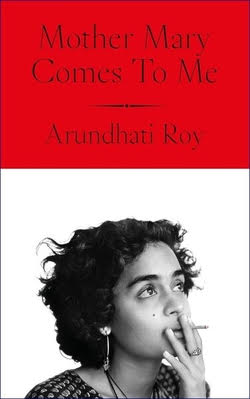
What struck me throughout was Roy’s refusal to simplify either her mother or herself. Love coexists with anger, gratitude with resentment, intimacy with distance. The book becomes not merely a memoir of a remarkable woman but a meditation on memory, family and the complicated ways in which parents continue to shape us.
Besides enjoying pure fiction, my readings (and writings) have always leaned towards biographies, memoirs, history, art and travel writing. Such books deepen my understanding of people and places and often nourish my own writing. Mother Mary Comes to Me belongs to that rare category of memoirs that leave one thinking long after the last page has been turned – not because they offer neat resolutions, but because they embrace life’s ambiguities with honesty and grace.
About the author
Arundhati Roy was born to Mary Roy, a Christian from Kerala and her husband Rajib Roy, a Hindu Bengali tea estate manager, on November 24, 1961, in Shillong, Assam, India. She is an author and political activist who is best known for the Booker Prize-winning novel The God of Small Things (1997) and for her advocacy of environmental and human rights issues. Her political writings criticise fascism, social injustice, and globalisation, among other issues. Roy has faced legal challenges, including imprisonment and charges of sedition and contempt of court for her activism. Nevertheless, her commitment to the aforementioned causes has sustained a spirit of revolution within the Indian political landscape. In 2017 Roy published The Ministry of Utmost Happiness. It is her second novel in 20 years. However, her literary output largely consists of politically oriented nonfiction, much of it aimed at addressing the problems faced by her homeland in the age of global capitalism.
About the writer
Rumana Husain is a Pakistani author, artist, and educator with a deep commitment to storytelling, art, and social impact. She was the co-founding Senior Editor of NuktaArt, an international art magazine that ran for a decade
(2004–2014). She has authored two critically acclaimed coffee-table books: Karachiwala – A Subcontinent within a City, which explores Karachi’s rich ethnic and religious diversity, and Street Smart – Professionals on the Street, a tribute to the city’s blue-collar workforce. Rumana has written and/or illustrated over 90 children’s books, and recognised with awards in Pakistan, Nepal, and India. In addition to children’s literature, she is a regular contributor to national newspapers. She has served as the head of a private school, co-founded The Bookgroup, wrote and illustrated children’s books and teacher manuals. She worked with the Children’s Museum for Peace and Human Rights as Head of Activism and Outreach.