Bright Side
FROM A CHANCE VISIT TO A LIFETIME OF SERVICE

by Anusha Zahid
An interview with Maria Paola and Francis Doherty on making Pakistan their home, transforming deaf education, and dedicating their lives to creating opportunities for a community long overlooked.
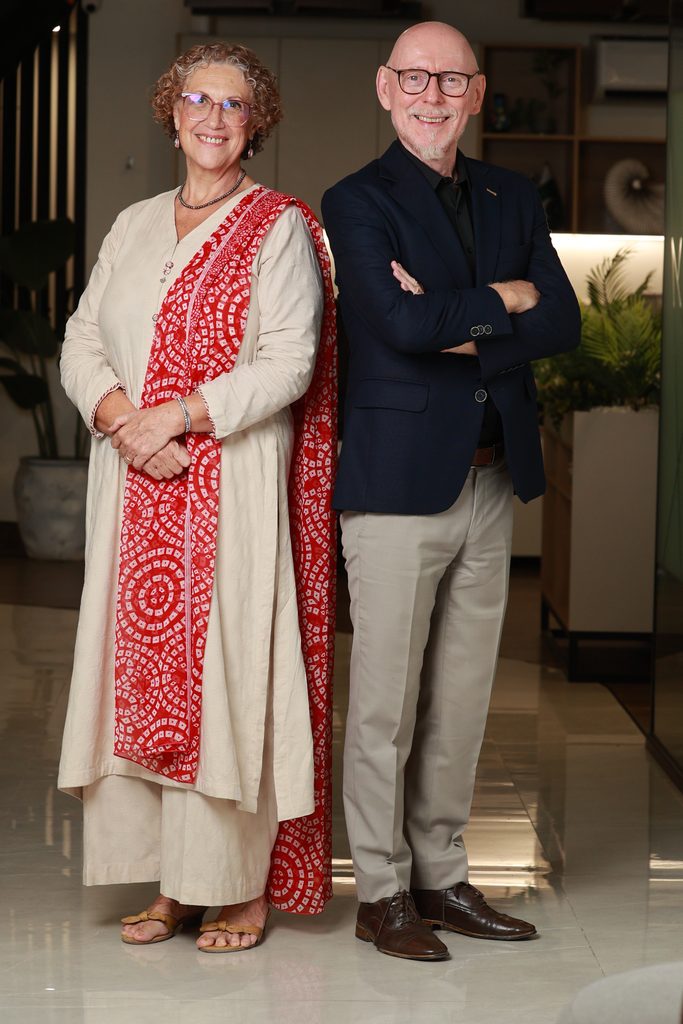
What began as a short visit to Pakistan became a lifelong commitment for Maria Paola and Francis Doherty. Drawn by the warmth of its people and a shared passion for social development, the couple made Pakistan their home and spent over three decades to empowering the Deaf community through education, skills development and greater opportunities for independence.
Today, Maria and Francis serve as Directors at Family Educational Services Foundation (FESF), the organisation behind Deaf Reach. Together with its founders, Richard Geary and Heidi Gustanski-Geary, and a dedicated Pakistani team, they have helped nurture an initiative that began with a small group of Deaf learners into an educational network reaching communities across the country.
Their commitment has also earned international recognition. Maria, an Italian national and founding member of FESF, was conferred the Knighthood of the Order of the Star of Italy by the Italian government in recognition of her services to Pakistan’s Deaf community through education.
In this conversation, the couple reflect on their journey from their early days in Karachi to the growth of Deaf Reach, the challenges of sustaining a philanthropic mission, and the country that has become an inseparable part of their lives.

GLAM: What brought you to Pakistan, and did you ever imagine you would make it your home for so many years?
Francis: We were young and shared a passion for social development. Before coming to Pakistan, we had spent four years in India working with young people. When our visas were about to expire, a friend invited us to visit Pakistan and explore opportunities to contribute here. We knew very little about the country, but we were adventurous and decided to take the plunge.
Maria: We never imagined staying this long. We thought we’d spend a few years here and then move on. But we connected with people so easily and felt a genuine sense of belonging. Their warmth and appreciation for our work made our experience more meaningful.
GLAM: What were your first impressions of Pakistan, and what struck you most about the country?
Maria: Karachi seemed more advanced than India in certain ways. But what impressed us most was the warmth and hospitality of the people. Whenever we stood by the roadside waiting for a taxi, someone would stop and offer us a lift.
Francis: We hardly ever needed taxis! People were much more trusting back then. If they saw a couple of foreigners waiting by the roadside, they would naturally stop to help. That kindness has stayed with us.
Q4: How did you get involved with Deaf Reach?
Francis: While exploring opportunities in teacher training in Karachi, we met Richard Geary and his wife, Heidi Gustanski-Geary, the founders of Deaf Reach, and decided to join forces.
Richard’s personal connection to the Deaf community through his deaf son led us to an old café in Saddar, where young Deaf people gathered. We soon discovered how limited their access to education, employment, and sign language resources was.
Richard suggested starting a small club, and the Metropole Hotel generously offered us a conference room. We used a VCR and movies to teach vocabulary and sign language, giving these young people, many from middle- and lower-income families, a space to learn and connect. As our work grew, we realised that Pakistani Sign Language was barely documented, and the only local resource we could find was a small booklet from Islamabad containing around 500 signs. We knew we needed to develop comprehensive sign language resources for these young people, and what began as a small gathering gradually grew into something much bigger.
GLAM: What were the biggest challenges in establishing Deaf Reach, and how did those early efforts evolve into a network of schools?
Francis: In the beginning, we had virtually no resources. A friend, whom we consider our first patron, generously offered us office space in Regal Chowk free of charge. We began inviting young Deaf people to learn sign language, computer skills and other practical skills. Gradually, we received donations of computers and equipment. We also reached out to the business community, inviting people to visit our classrooms and see our work firsthand. As awareness grew, so did the support.
Maria: As word spread, families from Baldia Town approached us for help educating their Deaf children. We secured sponsorship for a van to bring them to our centre every afternoon, where they attended classes with a Deaf teacher. As their sign language skills improved, so did their academic performance. By the early 1990s, we had outgrown our space in Regal Chowk and rented a few rooms on Shahrah-e-Faisal, where we opened a small primary school alongside a computer classroom. Drawing on our teaching experience and Richard and Heidi’s understanding of Deaf culture, we developed an approach suited to the children’s needs and began recruiting and training teachers, including young Deaf people who had studied with us and some of those early team members are still with us nearly 40 years later.
As our work expanded beyond Deaf education into teacher training and other educational services, we realised we needed a more structured organisation. In 2002, we formally registered Family Educational Services Foundation (FESF) as a nonprofit, with Deaf Reach becoming its lead programme.
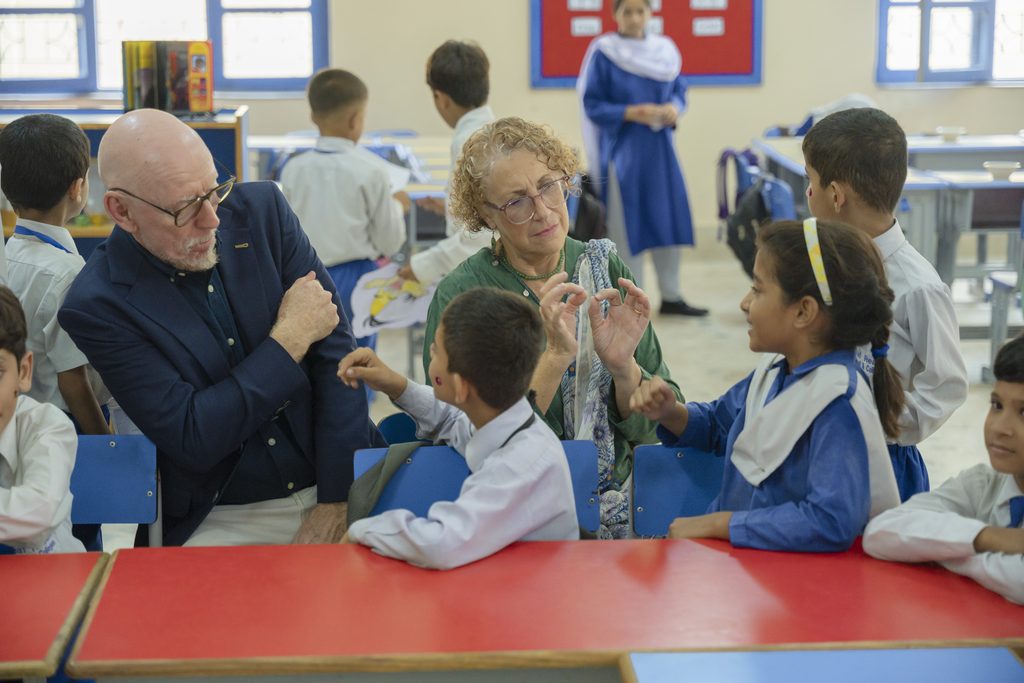

GLAM: What were some of the misconceptions about deafness that you encountered when you started, and which of those misconceptions still exist today?
Francis: When we started, there was considerable stigma surrounding disability. Deaf people were often marginalised, with limited access to education or employment. Many were expected to stay at home or take up menial jobs, while some families felt ashamed because of societal attitudes. One of the biggest misconceptions was the term “deaf and dumb.” We had to explain that Deaf individuals are equally capable and simply communicate differently, through sign language. Changing these perceptions has been a major part of our work. Although attitudes have improved considerably, misconceptions and social barriers still exist, making awareness and education as important as ever.
GLAM: How does FESF support Deaf students beyond the classroom and help them transition into meaningful employment?
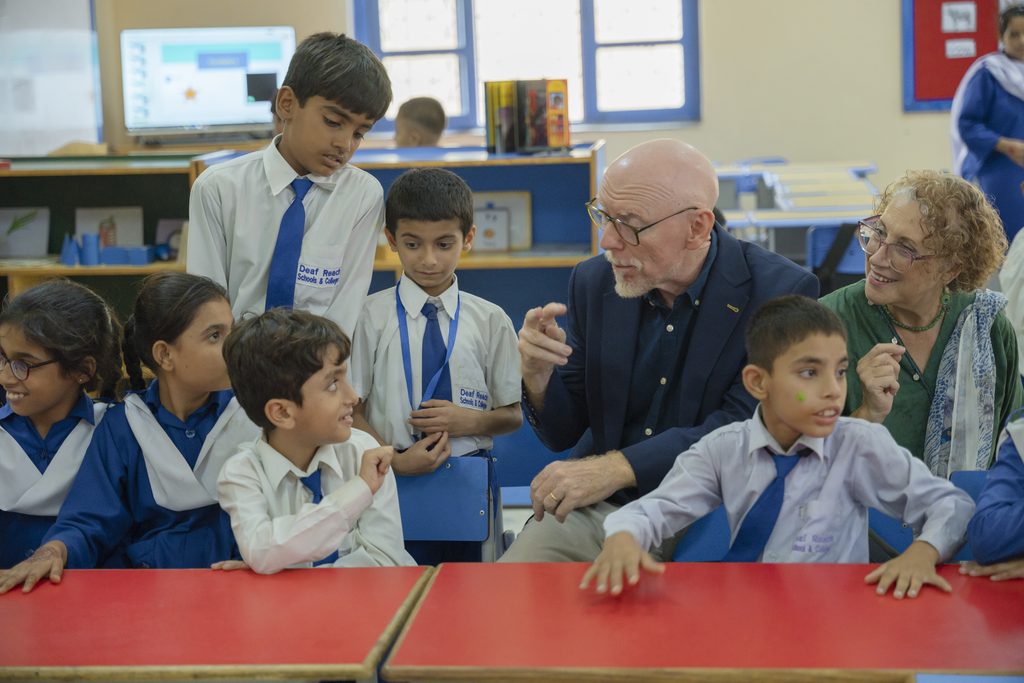
Francis: Family involvement has been central to FESF’s approach from the beginning. We realised that educating Deaf children alone wasn’t enough; parents also needed to learn sign language so they could communicate with their children at home. Hence, we encouraged them to attend school and organised sign language classes for them. Richard and Heidi, drawing on their experience of raising a Deaf child, helped families better understand their children’s needs. As parents witnessed improvements in their children’s confidence, communication and academic progress, their attitudes changed and many became our strongest advocates.
As our students progressed through Deaf Reach, we began thinking about what would happen after they completed their education. We had equipped them with computer skills and other practical abilities, but we wanted those skills to translate into real employment opportunities. It is then that we began approaching employers, drawing on our relationships with the business community, encouraging them to hire our graduates. And this is long before the government introduced a disability employment quota,
Today, our employment programme supports not only Deaf Reach graduates but also Deaf individuals from across Pakistan, and we have developed a structured process that connects candidates with employers and helps businesses feel confident about hiring Deaf individuals. To date over 3,800 deaf youth are employed across a variety of sectors, helping to build a more inclusive Pakistan.
GLAM: How has technology enabled FESF and Deaf Reach to expand education into remote areas of Pakistan?
Francis: We had already been working on digitising our curriculum and developing sign language resources, but the COVID-19 pandemic accelerated our efforts considerably. We established a studio to film lessons using illustrations and visual learning materials, enabling Deaf children to continue their education from home. During the pandemic, we distributed approximately 1,000 learning devices containing digital curricular content in sign language as well as the PSL Dictionary and Stories to over 900 classrooms across Pakistan. A donor also provided laptops for our students, while our teams visited their homes every two weeks or monthly to deliver materials, collect completed work and monitor progress. Parents became more involved as well.
The experience strengthened our digital infrastructure and demonstrated how technology could help us overcome geographical barriers. Today, we have a specialised digital learning programme, supported by a dedicated team that documents and develops sign language resources, all available online free of charge at www.psl.org.pk. It allows us to train individuals with little or no teaching experience to educate Deaf children in areas where qualified teachers and educational facilities are scarce. The setup is relatively simple: a classroom equipped with solar power, a screen and digital learning equipment. Teachers use our structured curriculum to guide children through lessons and help them progress through different grade levels.
This model has enabled us to establish satellite schools in remote communities. Remarkably, some are run by former Deaf Reach students who have returned to their villages to teach children who would otherwise have no access to education. Seeing them become educators in their own communities has been incredibly rewarding.
GLAM: Who have been Deaf Reach’s key donors over the years, and how has your fundraising approach evolved as the organization has grown?
Francis: Initially, our donors were mostly friends we had met through our work, contributing whatever they could. As the school grew, individual donations were no longer sufficient, so we approached companies, many of which came on board through their Corporate Social Responsibility (CSR) programmes.
As our work expands, so do our financial needs. Every year, we plan our next steps, from training more teachers to strengthening our marketing and resource mobilization efforts. We have recently begun applying for grants, while the provincial governments have supported us through various partnerships. We are also reaching out to the Pakistani diaspora in the United States and the United Kingdom to explore further funding opportunities. What encourages us most is that people in Pakistan rarely turn us away. They trust our work, and that means everything to us.
GLAM: How extensive is Deaf Reach’s educational network today, and how many students are benefiting from its programmes?
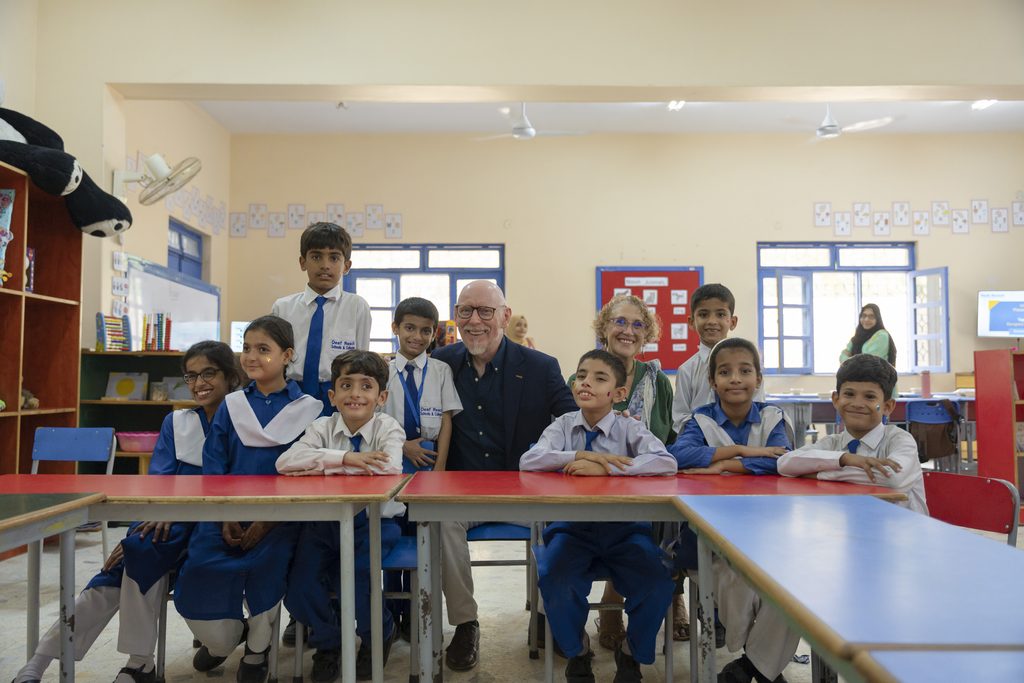
Francis: We currently have ten major centres, which we call our hubs, along with 50 smaller satellite schools in remote areas. We have also established satellite classrooms in approximately 40 government schools, bringing our presence to 108 locations across Pakistan. In Karachi, we have 410 students, with more than 3,000 across our main schools, and another 1,000 in smaller schools.
What makes our network distinctive is its reach across different provinces and remote communities. While countries like the United States have schools and universities for the Deaf, our model connects educational centres across the country. Deaf Reach is the largest organization in Asia working for the education and training of deaf children.
GLAM: After more than four decades in Pakistan, how has the country become part of your lives, both personally and culturally, and what has it given you in return?
Francis: Pakistan has become home in every sense. We celebrate all the festivals, sometimes quietly and sometimes with friends. Even our everyday language reflects the Pakistani way of life, and, of course, we love Pakistani food!
We are now great-grandparents, and after more than 40 years in Pakistan, this country has truly become our home. Whenever we visit the West, we sometimes feel like fish out of water. Returning to Pakistan always feels like coming home.
Pakistan has also broadened my perspective and deepened my understanding of people. Living in another culture opens your mind and teaches you to look beyond your own background. I particularly admire the values people uphold here, many of which seem to be disappearing elsewhere.
Maria: Family values are particularly important to me, and I find many of the same values here that I grew up with in Italy. That sense of family and togetherness makes Pakistan feel very much like home.
GLAM: Looking ahead, what are your personal and professional aspirations? Do you ever see yourselves slowing down or retiring?
Francis: There is still so much to accomplish. It is encouraging to see our younger team members taking on greater responsibilities. Hopefully, this will allow us, and Richard, to slow down a little. Though we do have a much larger team today than we did in the early years…but retiring completely? I don’t see that happening.
When you find something you’re truly passionate about and see it making a difference, everything else becomes secondary. Of course, there were sacrifices. We left our families behind and, with limited earnings, couldn’t afford to visit them often. But we had a clear purpose. Helping others gave us a sense of fulfillment that kept us going. Even after all these years, that sense of purpose remains unchanged.
Maria: Also, in remote areas, many families still struggle to imagine their Deaf children attending school or finding employment. Our teams work closely with these communities to build trust, raise awareness and help parents recognize their children’s potential. While we have made considerable progress, reaching the many Deaf children across Pakistan who still lack access to education still remains one of our greatest challenges. Our goal is to ensure that every Deaf child in Pakistan has access to education and the opportunity to build a meaningful future.
GLAM: Finally, what message would you like to share with the next generation of changemakers?
Francis: Young people have wonderful ideals, and I would encourage them never to give up, even when things don’t go as planned. With determination and perseverance, you can achieve meaningful results. There is nothing wrong with wanting a successful life, but make room for something that brings value to others. Set meaningful goals, help others succeed, and take philanthropy seriously.
Maria: Do things from the heart, not for recognition. People can sense genuine intentions, and that is what makes the greatest difference. Also, I would encourage anyone who wishes to support our work to come forward, whether through financial contributions, professional expertise or volunteering. Running Deaf Reach requires considerable resources, and every helping hand makes a difference.